Melanoma to the Letter
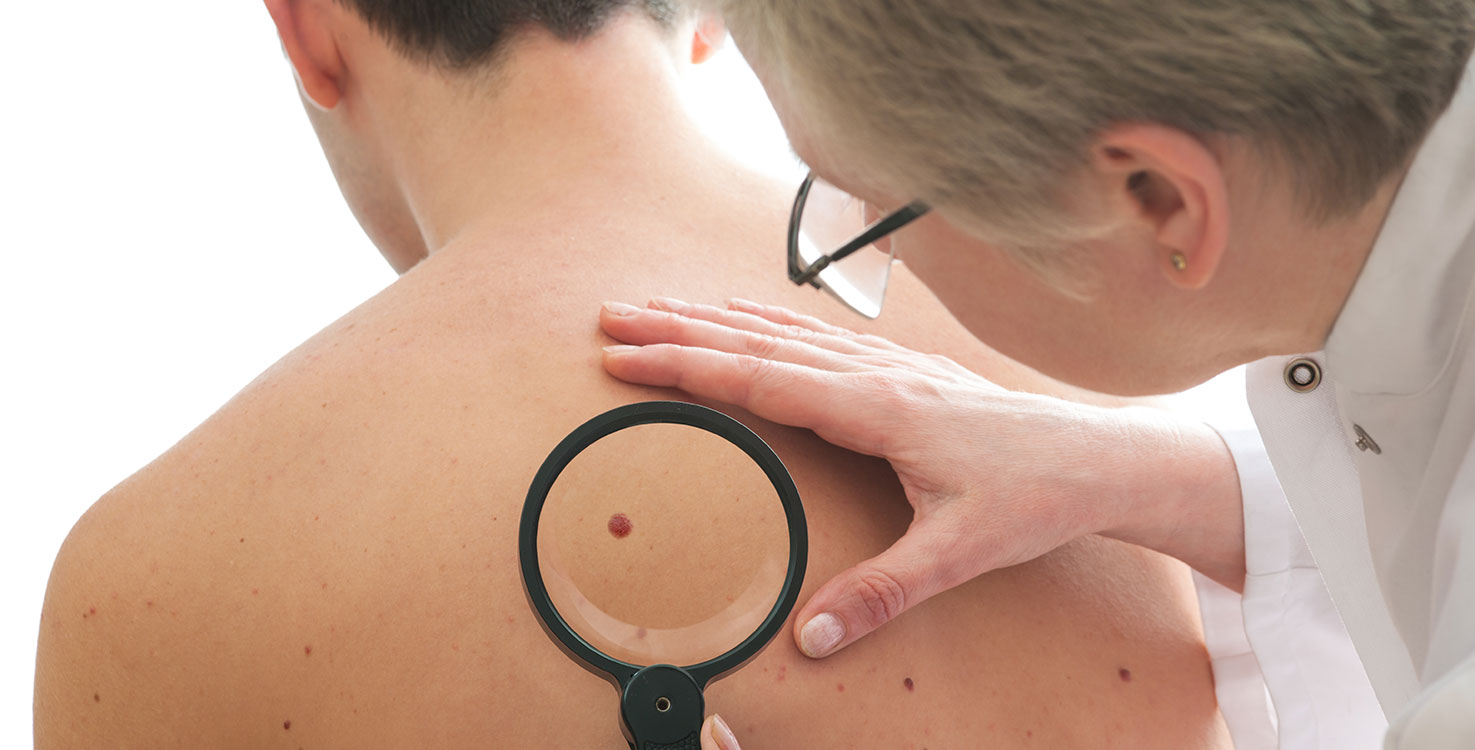
Melanoma takes the lives of more than 10,000 Americans every year, but with early detection and treatment, it’s almost always curable. That’s why it’s imperative to routinely check for suspicious or changing moles — no matter how much sunscreen is worn when outside. How do we know what we’re looking for? After all, there’s a difference between safe, benign moles and potentially dangerous moles that show warning signs of melanoma. That’s where the ABCDEs of melanoma come in:
- A: Asymmetry — Benign moles are symmetrical. If a mole is not symmetrical, it may be melanoma.
- B: Border — Benign moles have smooth and even borders. If a mole has jagged or notched edges, it may be melanoma.
- C: Color — Most benign moles are made of a single color. If a mole has more than one color, it may be melanoma.
- D: Diameter — If a mole has a diameter larger than other moles (1/4 inch or wider), it may be melanoma.
- E: Evolving — Benign moles don’t change throughout the years. If a mole starts to evolve in size, shape, color, elevation, etc., it may be melanoma.
Causes of Skin Cancer
The most common type of cancer for people in the U.S. is skin cancer, with 9,500 Americans being diagnosed every day, equating to more than 3 million Americans with skin cancer each year. Approximately one in five Americans will be diagnosed with skin cancer at least once in their lifetime. All these statistics aside, skin cancer is among the most preventable and treatable types of cancer, making prevention and recognition techniques especially valuable.
Skin cancer occurs when DNA damage causes unrestrained growth of abnormal skin cells, ultimately forming malignant tumors. Most skin cancer cases are attributed to overexposure to sunlight or tanning beds, but X-ray overexposure, burn scars, human carcinogenic chemicals and genetics may also cause skin cancer. Every person is at risk for skin cancer, but those with light skin or a genetic predisposition have a higher risk.
Understanding the Different Types of Skin Cancer
There are many types of skin cancer, but the most common forms are:
- Basal cell carcinoma (BCC), the most common type of skin cancer, which rarely spreads to other parts of the body and has a very low mortality rate.
- Squamous cell carcinoma (SCC), the second most common type of skin cancer, which may spread to other parts of the body and can be fatal.
- Melanoma, the most dangerous and deadliest type of skin cancer, which kills one American each hour. (The melanoma death rate is higher for Nevada residents than the national average.)
What Skin Cancer Looks Like
- BCCs often look like red patches, flesh-colored bumps, pink growths or open sores.
- SCCs most commonly look like scaly red patches, red firm bumps, open sores or warts. They also may crust or bleed.
Melanomas commonly look like moles, develop from moles or look like discolored splotches on the skin. They’re usually brown or black, but they can be a wide range of colors, including pink, red, blue or white.